Bridging the Gap: Why Industrial Maintenance Needs a Translation Layer for AI
A maintenance planning expert explores the critical gap between AI researchers' breakthroughs and what frontline industrial maintenance workers need. Learn why seamless AI implementation requires more than technology.
Reg Auge
10/13/20255 min read
Bridging the Gap: Why Industrial Maintenance Needs a Translation Layer for AI
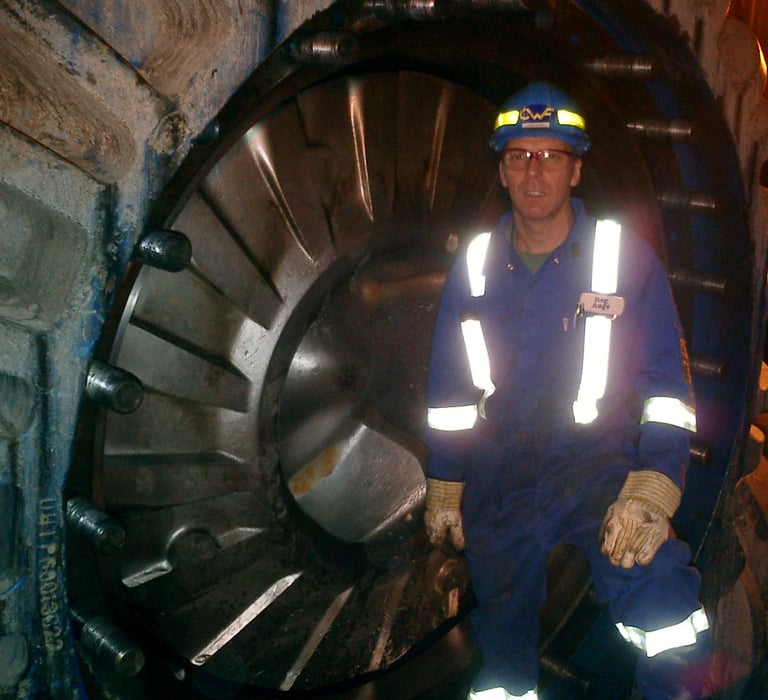
When you've spent over twenty years as a certified industrial mechanic managing maintenance planning and scheduling across oil, gas, and chemical facilities, you develop a healthy skepticism about transformative technologies. You've seen bold promises before. You know that the gap between what works in theory and what works on the plant floor can be vast. I learned this the hard way during major system implementations, most notably when I was part of an implementation team at an oil facility that changed ownership and migrated from SAP to Maximo. That experience taught me something valuable: the technical implementation is rarely the hardest part. The hard part is translating what the software can do into what the business actually needs.
Today, I'm watching the same dynamic play out across industry as companies rush to implement artificial intelligence. The difference is the pace is faster, the stakes feel higher, and the gap between what AI researchers have created and what frontline maintenance workers need to accomplish their jobs has become strikingly apparent to me.
The Hobby That Changed Everything
Two years ago, I started a website as a hobby to document my passion: traveling, particularly around the Mediterranean. I wanted to share experiences and practical advice with other travelers. It was meant to be a simple creative outlet alongside my professional work. Instead, it became an unexpected education in artificial intelligence.
Building and maintaining a travel blog in today's environment means encountering AI constantly. I started using AI tools for obvious tasks—drafting content, researching destinations, organizing information. But as I worked with these tools regularly, something shifted. I stopped viewing them as convenient shortcuts and started viewing them as a different way of solving problems. I began asking deeper questions: What's actually happening when I give this model a prompt? How does it handle ambiguity? Where does it struggle? What are its real limitations?
These weren't casual curiosities. They were professional instincts activating. If AI was going to reshape how my industry operated, I needed more than surface-level familiarity. I needed to understand what was actually happening under the hood.
So I invested time in online courses on Python programming and data science. I experimented with local large language models on my home PC, setting them up, training them on different datasets, and testing them against specific objectives. I used AI itself to create a structured learning plan—asking it to help me understand how LLMs work, then using that plan to deepen my knowledge systematically. The irony wasn't lost on me: I was using the technology I was trying to understand to help me understand it better.
As I progressed, I moved beyond general-purpose models to models specifically trained on maintenance-related data. I explored databases containing equipment failure information, run time data, diagnostic information, and vibration analysis records.
Understanding the Limits of My Understanding
Here's what I've learned through this journey: the people who have developed large language models and advanced AI systems are, hands down, some of the most intelligent people on the planet. Their work represents years of research, enormous computational resources, and genuine breakthroughs in how machines can process and generate information.
And despite all the time and effort I've invested in learning about AI, there are substantial areas where my understanding remains limited. I don't fully grasp the mathematics behind transformer architectures. I can't explain the nuances of attention mechanisms in the way a PhD researcher could. There are aspects of how these models learn that remain somewhat mysterious to me.
But here's what I've also come to understand: that's perfectly fine.
Because while there's an enormous gap between what AI researchers and data scientists can achieve and what I understand, there's an equally significant gap between what they've created and what maintenance workers and planners on the front lines actually need to do their jobs effectively.
The Critical Gap
This is the insight that has driven me to start this blog and commit to chronicling my learning journey. There's a translation layer missing—or at least, it's underdeveloped. The brilliant work done by AI researchers exists in one domain: papers, academic conferences, cutting-edge applications in tech companies. The real work of maintaining industrial equipment exists in a completely different domain: shift schedules, equipment downtime windows, data quality problems, organizational resistance to change, and the practical reality of plant operations.
I'm not a data scientist, and I don't pretend to be. What I am is someone who understands industrial maintenance deeply. I've lived through major system implementations. I've worked with enterprise software platforms. I've seen what happens when organizations try to transform how they operate. And I've now spent enough time with AI to recognize both its genuine potential and the very real obstacles to effective implementation.
The companies struggling with AI implementation today aren't struggling because the technology is inadequate. They're struggling because there's no clear path from "here's what AI can do in theory" to "here's how we integrate this into our maintenance operations." There's no translator explaining what those breakthrough advances in machine learning actually mean for a facility trying to optimize its maintenance schedule or predict equipment failures before they happen.
Why This Matters
The introduction of AI into industry is inevitable. The technology is too capable, too promising, and too rapidly improving to be ignored. But whether that introduction is seamless or chaotic, whether it delivers genuine value or disappoints, depends heavily on ground-level insight. It depends on people who understand both the technology and the operational reality translating between them.
It depends on understanding why data quality matters for AI implementation (and it matters immensely). It depends on recognizing that organizational change management is as important as technical implementation. It depends on being honest about timelines—AI won't transform your maintenance program overnight, but the cumulative benefits can be substantial over time.
It depends on people with frontline experience asking the hard questions: What problem are we actually solving? Does this AI implementation make our maintenance workers' jobs easier or harder? Are we collecting the right data to train these models? How do we maintain institutional knowledge as we implement new technology?
Moving Forward
I don't have all the answers to these questions yet. This blog will be my learning journey—honest, practical, and grounded in decades of maintenance experience combined with new knowledge about AI.
What I do know is that the gap between what AI researchers have achieved and what industrial maintenance needs is real and substantial. But it's not an insurmountable gap. It's a gap that can be bridged by people willing to invest time in understanding both sides. It's a gap that requires translators, and I'm committing to being one.
The industrial maintenance world has too much to gain from AI to let implementation challenges derail adoption. And the AI research community has done too much brilliant work to have it fail in practical applications due to lack of understanding at the operational level.
This blog exists in that space between—trying to understand how to make AI work not just in theory, but in the real world of plants, equipment, maintenance schedules, and the people who keep industrial operations running.
That's where the real work begins.
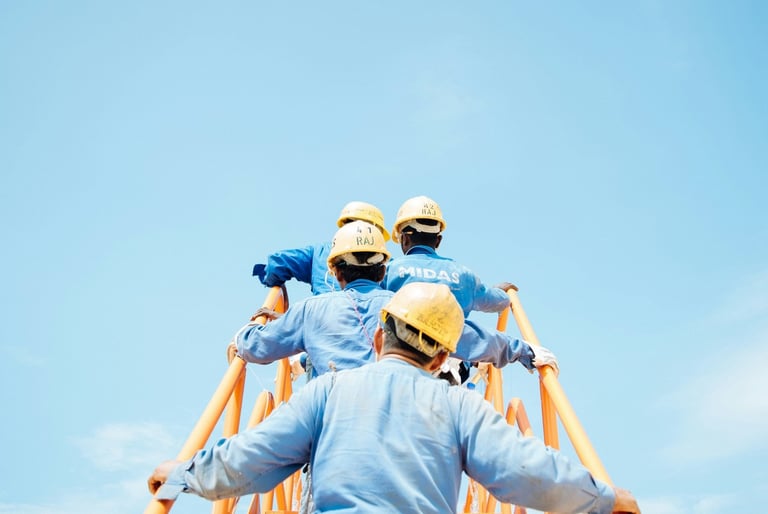

Author on the Tools.
Contact
Get in touch
Follow
Connect
reg.auge@aimaintenance.com
1-780-881-8064
© 2025. All rights reserved.